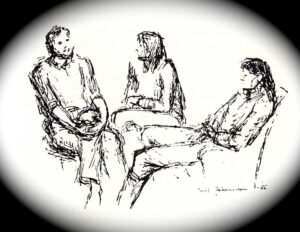
Group work has always been the beating heart of the SGL concept. For Jan P. Hagberg (JP) the fascination with human dynamics began long before it became a profession. At just twelve years old, he was appointed patrol leader of the Oter Patrol in a YMCA scout group in Halden, Norway — the first step in a lifelong journey of leading, observing, and developing people in groups. Friends would later joke that he had become “the eternal patrol leader” in almost every setting he entered.
What started as youthful curiosity evolved into deep professional expertise. Years later, as a hospital chaplain at the University Hospital of North Norway, Hagberg worked as a group therapist at the neurosis ward “Cesilie” at Åsgård Psychiatric Hospital — an environment shaped by bold and experimental thinking. The ambition was radical for its time: to help patients recover with as little medication as possible. This opened the door to intensive exploration of group psychology, sensitivity training, and therapeutic methods gathered from pioneering environments around the world.
JP`s experiences shaped his work as a university chaplain at University of Oslo and inspired his book “In the Same Boat” – about group growth and personal development.
Over the years, – while coaching leaders and knowledge-based organisations in both the public and private sectors, – the idea of GroupCoaching became one of the defining quality tools inside the SGL framework.
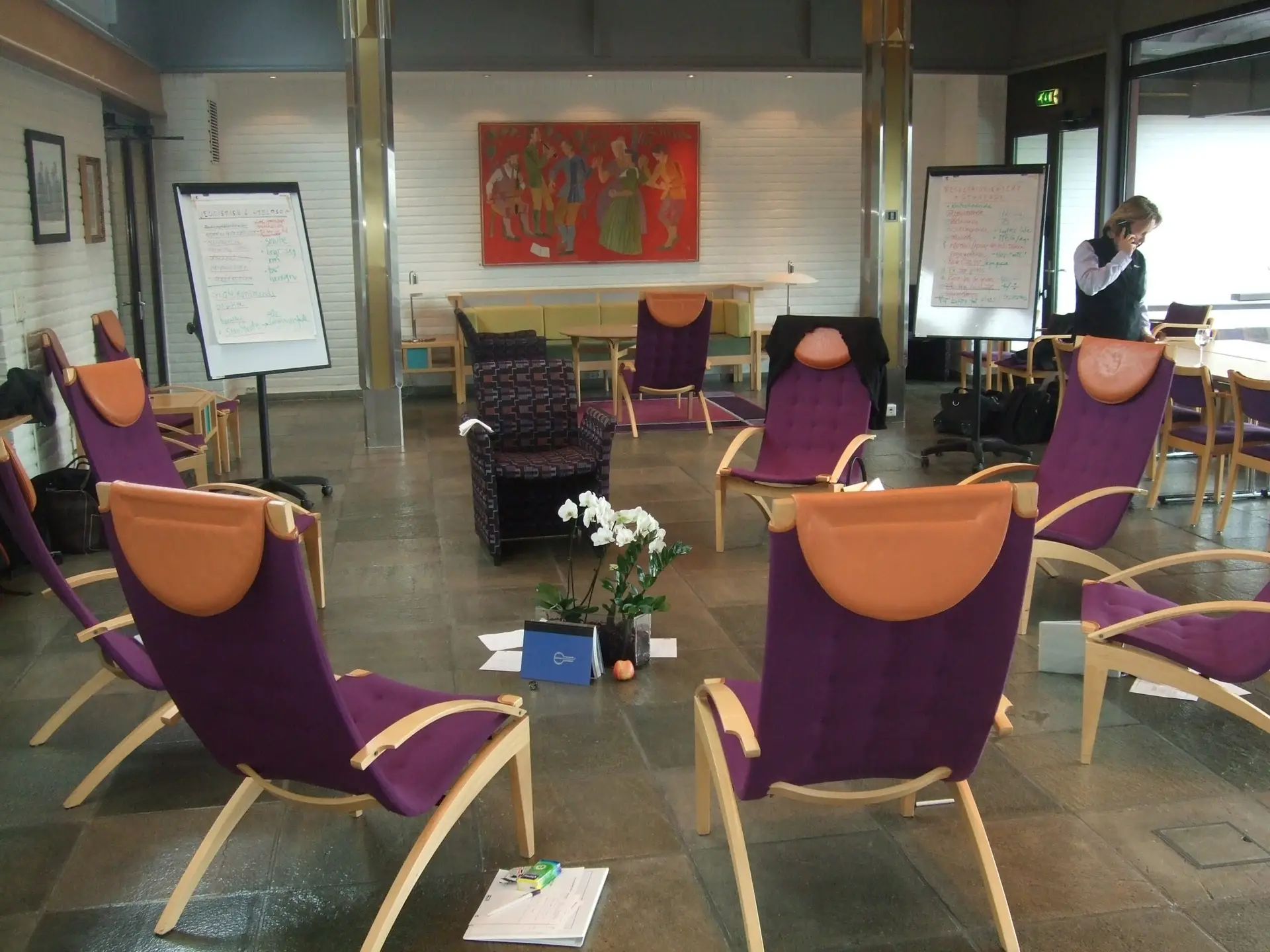
SGL Group Coaching is built around a simple but disciplined structure. A typical session lasts about three hours without a break and includes around 8–12 participants, including the group leader.
The room itself matters. It should feel open and spacious, with chairs arranged in a circle. Groups that meet regularly often place a round carpet in the center. The circle creates both structure and equality. Everyone receives roughly the same attention, and everyone has the same opportunity to speak openly.
The approach is inspired by Gestalt pedagogy and is based on clear communication rules and strong psychological safety.Without these rules, a group quickly becomes a place where the loudest voice wins and the quietest withdraws. With our Seven Core Principles, something else becomes possible.
1 – Practice active listening.
2 – Never interrupt or correct someone while they are speaking.
3 – Speak directly to the person you address.
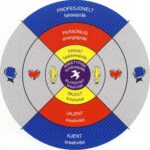
4 – Separate different types of messages:
5 – Facts — observable reality / Blue
6 – Fantasy — personal interpretations and assumptions / Red
7 – Feelings — emotional reactions and experiences / Yellow
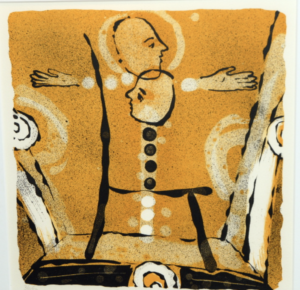
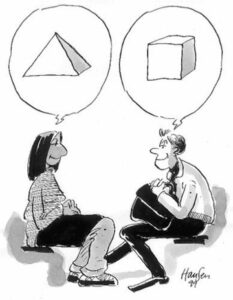
“Forgiveness” drawn by the norwegian graphic artist Ragnar Hauge (b.1947) – is one of the strongest illustrations I know of what can be played out in “The Hot Chair”. – The drawing hangs in my office in Cascais
Ragnar Hauge’s drawing attempts to capture the moment Birkeland describes in the following — “the instant someone sees themselves through the eyes of others.”
“I noticed that you covered your mouth several times while speaking.”
“I got the feeling that you were holding something back.”
“I got a fantasy that there might be something you are afraid to say.”
“I have participated in many of JP’s groups over the years, and I have also used the process in my own management team, as HR Director at U&P / Norsk Hydro
After forty years with SGL, I believe this is what makes the method unique. You learn to know yourself while walking together with others who are searching for the same thing.
SGL is not something you simply read about. It is a process you must experience — and complete — even when it becomes uncomfortable.
The exercises JP brought from his background as a priest and therapist are essential.
One of the strongest exercises is what we called ‘the confession.’
You dare to unfold your self-image in front of a group that seeks the same honesty. You begin to see yourself through the eyes of others.
The key to making this safe is the discipline of active listening and careful language. People say: ‘I get a fantasy from what you say,’ instead of making hard accusations.
Over time, something loosens. Slowly but surely, courage grows. People dare to show their true face and accept the positive power of honest feedback.”

What you have read so far is the structure. The experience cannot be transferred through text. It must be lived. But the structure makes it possible.
SGL Group Coaching is not traditional therapy. Nor is it ordinary team-building.
It is a structured process of self-awareness, communication, and human development through interaction with others.
The method is based on a simple but demanding insight:
We rarely see ourselves clearly alone.
But in a trusted group, where listening is deeper than judgment, people often discover entirely new perspectives about who they are, how they affect others, and what they truly want to become.
In the following section, we will look at a practical example that illustrates how participants’ self-images can emerge — and how hidden reactions and emotional patterns may gradually be transformed through the group process.