Secret 15,2 / Values / Needs

Process of forgiveness

Hundreds of centuries have told: The process of forgiveness has its own logic. Either it must be completed, or it will turn into revenge. Through the story of Joseph we understand that the ability to forgive depends on wisdom. At every level it is necessary to acknowledge: – “I would have preferred that (…), but if you can acknowledge what you feel now, then I must be satisfied with that ”  … and so on, until everything has been acknowledged.
Important stages will always be:
I – Anxiety and anger / Peccator
Cf. the brothers’ despair:
“Surely we are being punished because of our brother.”
(Genesis 42:21)
II – Fear of consequences / Contritio
Cf. the brothers’ fear:
“You see, the money we found at the top of our sacks we brought back to you from the land of Canaan. Why would we steal silver or gold from your master’s house?”
(Genesis 44:8)
III – The guilt of conscience / Confessio
Cf. the brothers’ answer:
“How could I return to my father if the boy were not with me?
I could not bear to see the misery that would come upon my father.”

(Genesis 44:34)
IV – Forgiveness / Absolutio
Cf. when the brothers are forgiven by Joseph:
“I am Joseph, your brother, whom you sold into Egypt.
And now do not be distressed or angry with yourselves because you sold me here.”

(Genesis 45:4–5)

LESSON 15,2

forgiveness: some examples

(6) RESISTED

AND

MATURED


Joseph in prison


(Genesis 39:19–20 and 40:8)
Potiphar’s wife took revenge by saying, “This slave has done this to me.” Potiphar became furious and had Joseph thrown into the king’s prison.

Later the captain of the guard placed Joseph in charge of two of Pharaoh’s officials who were being held there. While in prison Joseph also interpreted their dreams.
Joseph had to pay a price for his strength and for his intellectual freedom to say no in accordance with his moral principles of loyalty and justice. Suddenly and violently he was thrown into prison for something he could have done—but did not do.
Yet the time in prison opened space for his old dreams and for his inner life. When we are cut off from the familiar and have no possibility of influencing our outward circumstances, we are often forced inward into ourselves. We call it a crisis, and we are often surprised that crises actually change us—indeed, that many people grow through adversity.
The prison, as a metaphor, may be compared with the “inner exiles” that we are sometimes trapped in. It can appear as depression or emptiness connected with loss, or as illness and injuries of body and soul that bind us to beds of sickness and long periods of recovery.
Yet such involuntary “exiles” almost always mature us. Great leaders have nearly always experienced one or more inner exiles for different reasons during their lives.
Without these exiles they might—like Joseph—never have become who they eventually were.

(7) RECRUITED AS
A RESOURCE

Joseph with Pharaoh

(Genesis 41:14–15)
“Then Pharaoh sent for Joseph, and they quickly brought him out of the prison. (…) Pharaoh said to Joseph: ‘I have had a dream, and there is no one who can interpret it. But I have heard it said of you that when you hear a dream you can interpret it.’”

Two years later Pharaoh had a dream. But there was no one who could interpret it.
Once again Joseph was “headhunted,” but this time it happened on his own terms. The challenge was great, and Joseph’s special competence was needed. Everything took place when the time was ripe.
One characteristic of true leadership is always this: the right person in the right place at the right time.
Joseph took on the challenge and received the highest corresponding reward — responsibility and power. All his life experiences and all his resources were now put to use for you and for me. In this way history — and the “world” — always provides the conditions for when and how our special resources are needed.

(8) HELPER AND FORGIVER

Joseph meets his brothers


(Genesis 42:1–2)“When Jacob (Joseph’s father) heard that there was grain in Egypt, he said to his sons: ‘(…) Go down there and buy some grain for us, so that we may live and not die.’”

Joseph’s journey — from great dreams, through the experience of the pit, slavery, temptation and imprisonment, and finally to Pharaoh’s court and the position of chief adviser — was long and difficult.
Yet the most important choice in relation to decisive success happens now.
The unexpected meeting with the brothers who had awakened betrayal and hatred deep within him places Joseph in a position where he must choose between forgiveness and punishment.
The process was open and uncertain. The outcome depended on the brothers’ self-insight and honesty, and on Joseph’s maturity as a wise man.
The path that follows shows that forgiveness as wisdom is neither easy nor cheap. Forgiveness requires time in order to become real.
Joseph could certainly have preferred a quicker confrontation, but by allowing time and patience, the process is pressed deeper and deeper until forgiveness and reconciliation recreate everything that had been destroyed.

(9) RECONCILIATION

Jacob travels to Joseph


(Genesis 46:5)“So Jacob set out from Beersheba. The sons of Israel took their father Jacob and their children and their wives in the wagons that Pharaoh had sent to carry him.”
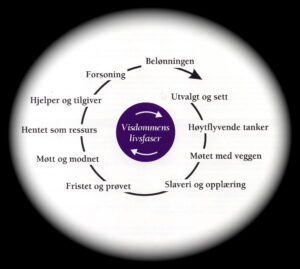
Forgiveness means bringing together what has been split and separated. Reconciliation is the condition for every reunion, both in private life and in professional life.
Through forgiveness, reconciliation and reunion we recognize the fundamental tone in the demanding quality concept: Quality of Being.

(10) THE REWARD

Joseph becomes the bearer
of blessing

(Genesis 48:15)“So he blessed Joseph and said: – ‘May the God before whom my fathers Abraham and Isaac walked faithfully, the God who has been my shepherd all my life to this day (…)’”

Wisdom and blessing belong together. To those who are given much, much will also be expected.
Therefore the blessing and the true rewards do not follow seniority and positions, but honesty and self-insight.
Blessing as reward requires integrity in relation to wisdom. In this way the interaction between forgiveness and permission becomes visible — for in permission there is also forgiveness.
Home Lessson 15,2

Take a few minutes and review some episodes in the lives of important people.
Perhaps unknown to us, but important to you. Why?

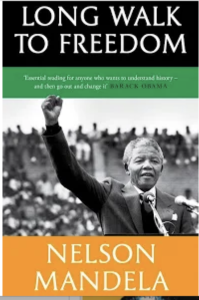
Also review a little about the life of Nobel Prize winner Nelson Mandela. Do you find similarities with Joseph?