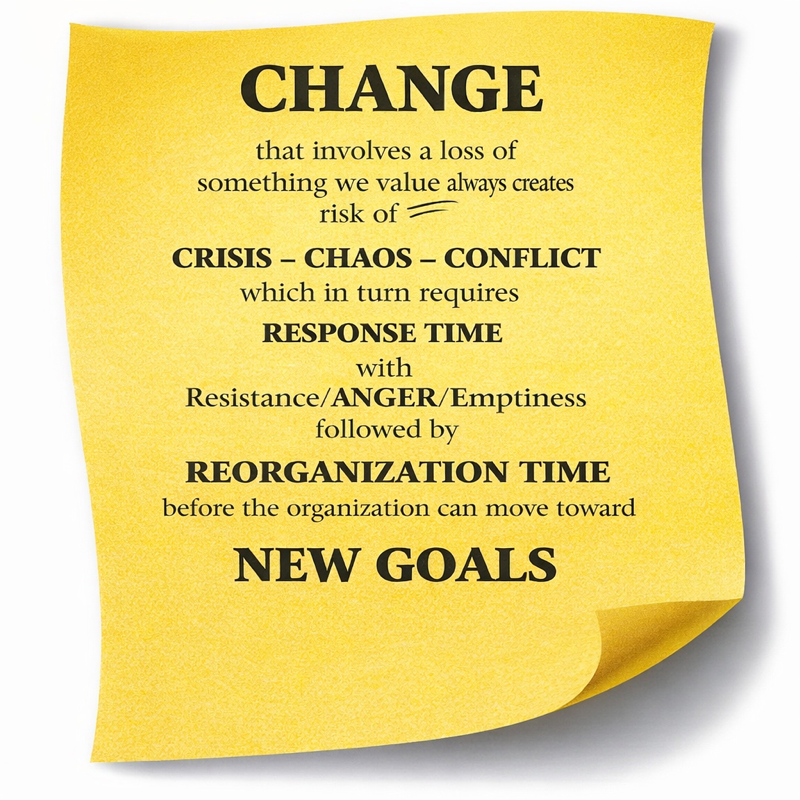
Many years ago, I wrote a book about grief and change reactions. This was long before the term crisis psychiatry was commonly used, but in essence we are talking about many of the same emotions and reactions. Over the years, this led me to give lectures at many seminars and courses on such topics. In recent years, I have also taught personnel connected to crisis and rescue services after major accidents.
These participants came from many professions: helicopter pilots, rescue workers, doctors in air ambulances, ambulance drivers, nurses, anesthesiologists, firefighters, police officers, priests, and funeral service staff. All were highly qualified in their practical tasks, but often unprepared for their own and others’ psychological reactions in situations of stress and catastrophe.
At the beginning of one such course, deep in the Ringebu mountains in Gudbrandsdalen in Norway, I got a provocative idea.
Instead of lecturing about crisis reactions — I would create them.
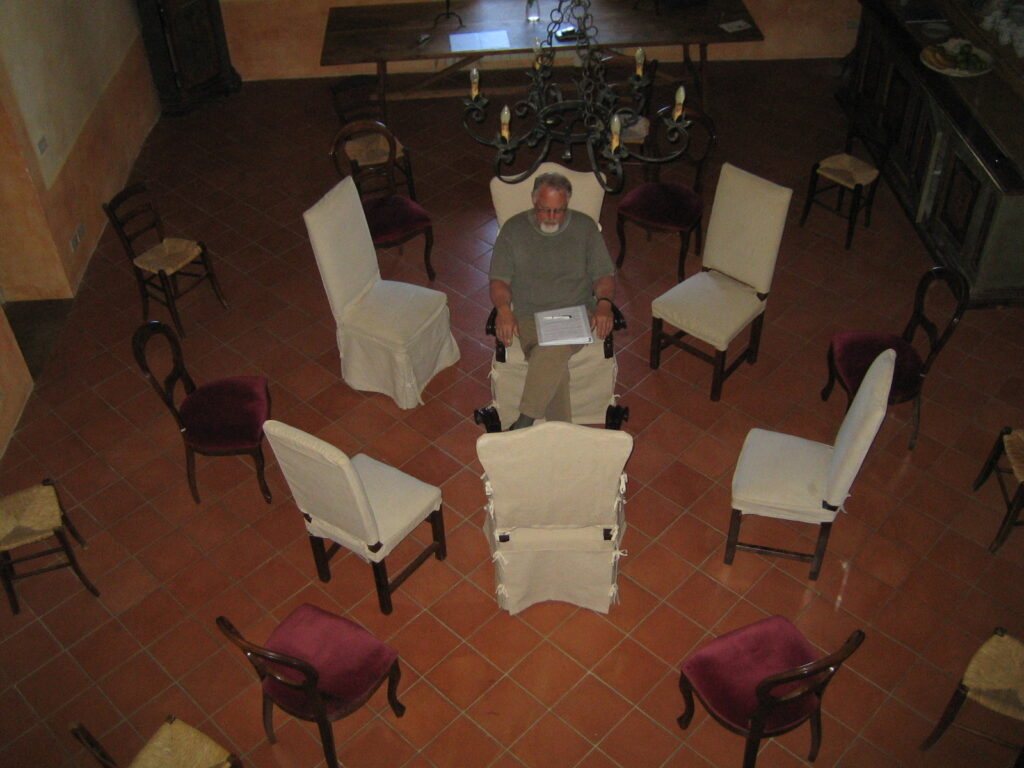

Demonstration of
positional power
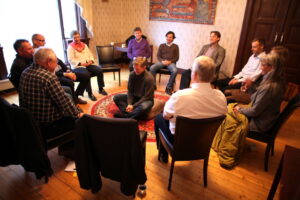
We continued to say nothing. Our defined positional power as seminar leaders was enough. After less than a minute, someone carefully tried the door. They realized it was locked. Restlessness began. No one answered.
After a few seconds, people started whispering to each other. Then several began to speak loudly, demanding that we open the door. We did nothing. More people joined the discussion. Many addressed us directly — mostly me, since I was perceived as the main lecturer.
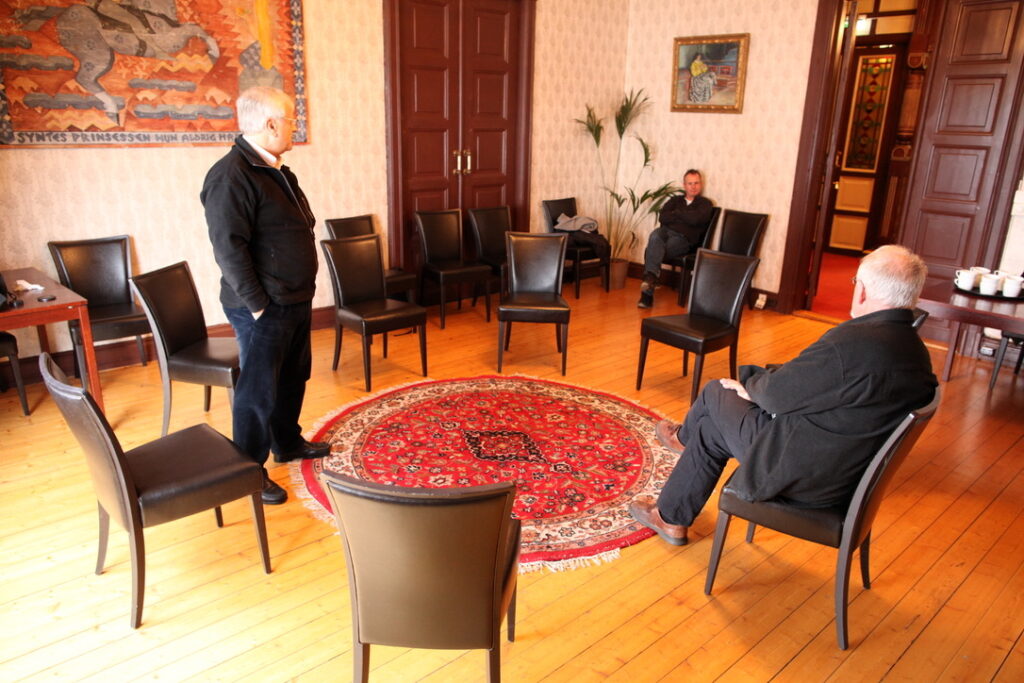
Then I said:
“It seems dangerous to accept that nothing is happening.”
The man turned sharply and sat down again. Silence followed. Finally, someone spoke and asked angrily how long we were expected to sit like this. I said nothing.
Others raised their voices. Everyone spoke into the air, or directly to me. There was no real communication between participants. It felt like everyone competing for attention. Someone suggested forming an alliance. Two people in the outer circle stood up to leave

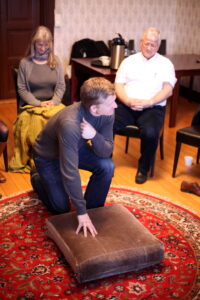
I admit it was a powerful experience — especially because it was not listed in the program. The participants were completely unprepared and reacted accordingly. In the following plenary discussion, we systematized what had happened in relation to known theories of large-group dynamics and leadership. In a concentrated form, we observed a development through eight phases:
Phase 1: Submission
The first thing demonstrated was complete submission to authority. Despite the unusual room setup, no one questioned it. Like well-trained sheep, everyone gathered around the official leaders.
Phase 2: Expectation
Next, we observed clear expectations of initiative and action when someone knocked on the door.
Phase 3: Aggression
When nothing happened, the situation quickly shifted into open criticism and aggression.
Phase 4: Struggle
The provocative situation created space for a cautious attempt to challenge leadership.
Phase 5: Flight
When I pointed out that the group allowed action in order to reduce its anxiety, it was like puncturing a balloon.
The atmosphere became passive and resigned. Two people stood up to leave. They were probably speaking on behalf of many.
Phase 6: Alliances
A new phase began when one person tested whether he could take power and attention. He was not accepted, but the group’s need for leadership led to the formation of several small alliances.
Phase 7: Pairing
None of the alliances seemed strong enough to take leadership. Two “crown princes” were appointed: the psychiatrist and the course secretary. At the same time, fantasies arose about the empty chair. Who could take that place?
The course leader felt responsible and showed this by changing seats.
Phase 8: Reality awareness and growth
By pointing out how fantasies and expectations were pushing for a leader, it was like revealing that the emperor had no clothes.
It no longer felt so dangerous to be “exposed” without a leader. It was bearable.
The group began to take responsibility for an unusual situations.
Listen to the video 10,2 |