Secret: 10,3 / Large Group Process

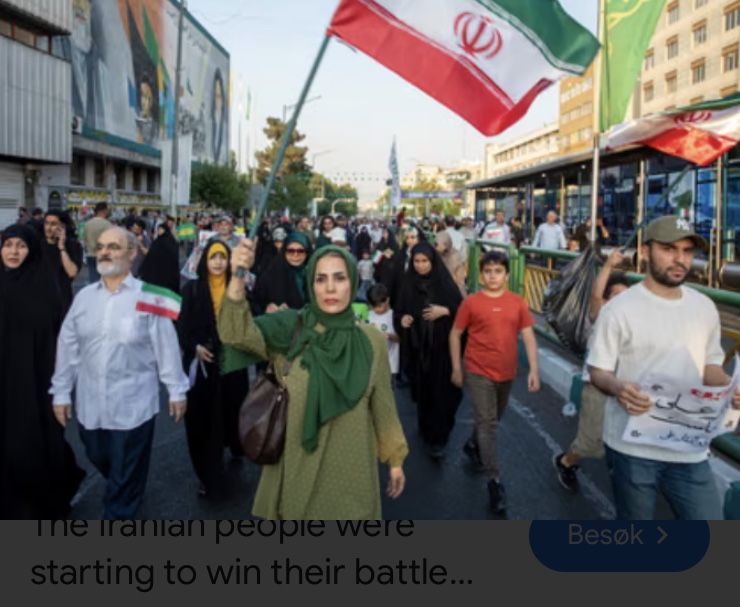
“Iran in Bion’s Mirror — and the Road Ahead” in march 2026

What group psychology tells us about a nation finding its voice I have spent years sitting with groups in rooms where the air was thick with things unsaid. I have learned that silence is never empty. Silence is the group holding its breath — gathering courage before it acts. That silence is what I hear from Iran right now. And I am not afraid of it. I am watching it with curiosity.
Psykologen Wilfred Bion spent his life studying what happens to groups under extreme pressure. His conclusion was both simple and profound:
Before a group can think clearly, it must feel its way through chaos. Collectively, unconsciously, it moves through three survival patterns — not as failure, but as process.

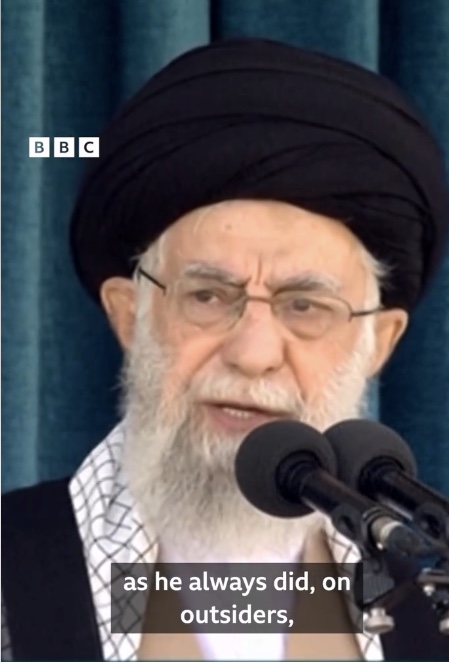
Iran in March 2026 is living that process in real time. Dependency gives way when the old father no longer answers. And he no longer answers. Fight-Flight burns hot but burns fast. External enemies are borrowed time. The group knows this, even when it cannot say it yet.
Pairing is where hope begins to organise itself. Factions form. Alliances are tested. Some break. Others hold. This is not chaos — this is a people trying out futures.
Here is what history — and group psychology — teaches us about power struggles: The first mover is always the loser. In every great transition, those who reach for power too early expose themselves and are consumed. Status quo, meanwhile, is slow self-destruction. A regime that cannot reform will eventually eat itself. This is the paradox of the power struggle phase: everything looks like chaos, but underneath, a brutal and necessary selection process is underway. Alliances will be built, broken and rebuilt.
Two fronts will eventually emerge with enough clarity and enough courage to name what they truly stand for. And that is the moment — not of maximum violence, but of maximum choice and fantasies about the next president or crownprince, the son of the old king.

LESSON 10,3

LARGE GROUP DYNAMICS

The large-group dynamics I describe here—based on a real experience—have received relatively little attention in management literature and leadership development.
Even so, the theoretical models are taken from W. Bion’s work from the 1950s.
The connection between large-group dynamics and organizational development is nevertheless well known through the English Tavistock movement and its Nordic branch NORSTIG, which organizes annual, high-quality courses.
In my view, a great deal can be learned from the experience material from the NORSTIG conferences
A key insight from the exercise is that a group seems to operate on two levels:
  • One level is conscious and rational, with a clear purpose (in our case, the course plan).
    The other level is unconscious. Bion calls this the basic assumption, also known as mental images or the hidden agenda.
There will always be tension between these two levels. The unconscious level can either support the rational work—or weaken or undermine it. The most common basic assumption in a group is dependency – This rests on an unconscious fantasy that the leader should take all responsibility and free members from anxiety and worry.
It is as if everyone becomes a child.
Such dependency leads to collective regression. In seminar settings, it becomes clear that participants stop functioning as mature, responsible, competent adults. Instead, they take on roles as helpless, insecure, and less capable than they really are.

When “the world” sets the agenda

Unconscious dependency needs often surface as conflict or crisis reactions.
These, in turn, affect the leader and leadership.
Most leaders do not dare to do what we did in the exercise. Instead, the organization unconsciously pushes the leader into roles that are neither rational nor sustainable over time.
Members place their competence, responsibility, and maturity onto the leader. The leader may then feel stronger, more capable, or more powerful than they truly are.
In this way, leaders are influenced by the group’s positive or negative energies.

This phenomenon is called projection—we transfer our own expectations and values onto another person, much like idealizing someone we are in love with.
If the leader accepts this role, we get the leader we deserve. This is known as projective identification: unconsciously becoming what others make us into, rather than who we truly are.
When we receive projections in this way, we act like a container—we get filled up. This is not harmless. What fills us changes us.
If I am expected to know everything and handle everything, I may start to believe that I do. The fall can then be hard. The megalomaniac is rarely more extreme than what the environment allows.
The same applies to criticism and dissatisfaction. Over time, we may become what we are accused of being. This becomes a self-fulfilling prophecy.
If a leader withdraws to avoid expectations of strength, disappointment and anxiety soon surface. If aggression is not addressed, it never disappears. We see this clearly in delegation processes.
When teams are given more responsibility, they often demand clearer direction and stronger control. If they must figure things out themselves, irritation, frustration, and aggression increase.
Then another basic assumption emerges: the group’s mental images.

Struggle, flight, and pairing

The group may feel a need to fight (see Phase 4). This can take many forms: mistrust, control, attacking the leader, or internal conflicts.
It may also lead to flight: leaving the group or turning against the leader (see Phase 5).
In hectic project settings, this can appear as rumors demanding the leader’s removal, or people creating their own rules. Others withdraw, claiming that the project lacks leadership.
This can push the leader into becoming more authoritarian, suspicious, or controlling—like a strict parent.
In this process, any “crack looking for an axe” will be found. People with similar ego states find each other and form alliances (see Phase 6).
At the same time, fantasies arise about a “crown prince” who could take over leadership—preferably someone with a clearer profile.
This is what Bion calls pairing. It has little to do with gender.
Pairing usually does not happen openly. It is driven by unconscious needs directed toward two group members. This creates hope or excitement.
The unconscious fantasy is that these two will eventually produce something that solves the group’s problems (see Phase 7). – In such groups, intimacy and sexuality may be experienced as protection against underlying dependency and aggression conflicts. These dynamics can also affect the leader.
In our exercise, all these phases became visible on the surface within 120 minutes.
Had we continued for days, behavior would have become even clearer. Ego states and underlying roles would have solidified.
This is exactly how it works in real life. Beneath the surface, roles live on and guide our actions.

Awareness creates capacity

Bion believed that group members are far more affected and frightened by these unconscious tendencies than necessary.
By bringing them to the surface—making them visible and conscious—the group’s ability to work rationally increases.
We experienced this in our seminar. In the final phase, the large group relaxed. Participants felt safe handling the situation during the remaining minutes.
They took responsibility for being alone together.
The struggle was over.
The work could begin.

Closing reflection

Professional leadership means being attentive to these reactions during change and transition—when “the world” sets the agenda.
Then nothing works as planned.
There are only moments where one must take responsibility in ways one never imagined.
That is why it helps to recognize your own stress reactions.
What is familiar is never as frightening as what is unknown.

Home Lesson 10,3

What distinguishes the process in a small group of 8-12 people from a large group of 12-40 people? – Identify two factors that distinguish the processes!

Be Dynamic with your values!
NEXT LESSON /  Secret 11