HOW TO CREATE A WINNER TEAM

lesson 9,2

A group is like a library. Everyone has their stories. Everyone has their ambitions. Everyone is best when you show joy in colleques success.

STEP 1

Clear
goals to
achieve what
we truly want

STEP 2

Good
communication
in blue, red, and
yellow language

STEP 3

Strong
involvement
in each other’s
work and tasks

FIVE

STEPS

TO GOLD

“SGL is so original and different
from other Courses that it adds new skills and shakes many managers out of solidified attitudes and ways of thinking.” Ivar Ramberg / U&P Hydro

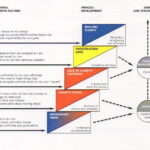
Read: BOTTOM UP: Find your team in the Team Growth Matrix
The world, and the way we live together, is changing rapidly.
Yet the human being who lives in and depends on the world around us has remained the same — from the beginning of time until today. This is a paradox, but also an opportunity. It allows us to learn from historical experience, insight, and wisdom about what it means to be human — born of a woman. Self-help and self-understanding therefore become a timeless project.
Deep inside, we are as we have always been. We have real and basic needs: to be wanted, loved, and chosen; to be accepted and valued. That is why old stories become modern videos, and ancient myths become contemporary art. On the surface they look very different — deep inside they tells the same narrative.
SGL as a leadership tool works to make the unconscious conscious, and the conscious visible, so that you can guide your own life toward what you want to achieve. In practice, this means getting to know your strengths, and acknowledging your shadow sides when you act in different roles on the chessboard.
The path to a realistic understanding of oneself is long — like a confession before absolution in many church traditions. – It is a process. What is interesting, however, is that the process is the same today as it has always been.
In SGL, we deliberately compare the five steps of confession with the five phases of a group process toward new goals. – So let us begin, as it is told in my book In the Same Boat — about group growth and personal development.”/ The National Libery, Norway
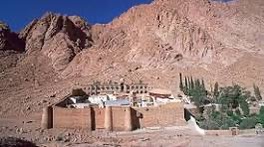
On every continent and in many countries around the world, there are mountain peaks that people feel drawn to climb. Some of them are experienced as having a special power and attraction, making them both famous and sacred. The most well-known of them all is Mount Sinai in Egypt.
Here, Moses received the stone tablets with the Ten Commandments, written in a language only he could interpret, more than 1,200 years before the beginning of our era. This event has shaped—and continues to shape—Western culture to this day.
At the foot of the mountain lies St. Catherine’s Monastery, dating back to around 550 BCE. From there, a demanding pilgrimage path leads to the summit of Mount Sinai. In close dialogue with nature, the path follows the five phases of repentance, level by level, toward the peak and the sunrise, after several hours of walking through the night.
I have walked this path myself—and I was astonished. This was pastoral care, psychology, self-development, and self-leadership in their most naked, authentic, natural, and powerful form. The experience confirmed everything I had learned as a pastoral counselor and Gestalt therapist, and it made SGL the unique leadership tool it is for those who truly want to achieve something. – At its core, it is all about a journey—a walk and a process in five steps.

The process

Contritio

Confessio

Absolutio

Any change on the outside always demands a corresponding change on the inside. It may lead to improvement, or it may make things worse—but the outer and the inner are always synchronized and adjusted to one another.
That is why concepts/contritio such as development, change, renewal, growth,
and improvement point to processes that are far more complex than they first appear.
In the bigger picture, nature follows its own laws/confessio, regardless of circumstances or intentions.
This means that no psychologist, therapist, pastoral couneslor, or coach can guide a person or a team through demanding phases of development using quick fixes or simple exercises that promise instant success.
The journey toward a winning team always requires growth/absolutio —both in the coach and in the participants. Skills must develop. Emotions must mature. This applies to each individual and to the team as a whole.
In the following, we will explore the process as you may recognise it in yourself as an individual.
In Lesson 9.3, we will examine the very same process from a group perspective.

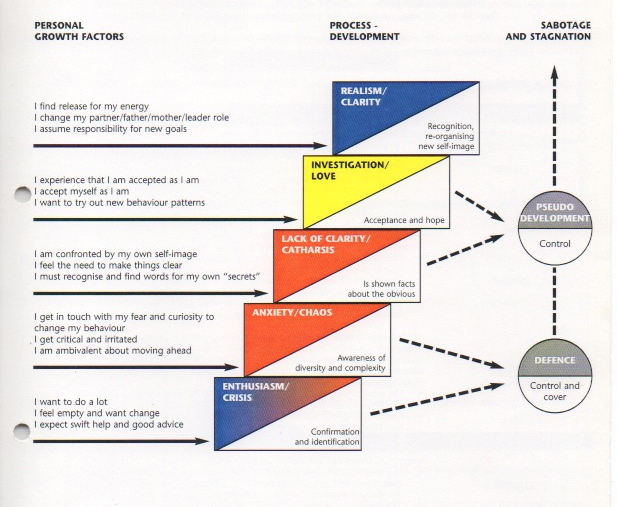
PHASE 1

“As a leader and project manager, I want a lot. The group I am leading consists of many capable people, but I miss a shared passion. I feel empty and long for change. I am looking for quick help and good advice.”

SGL says:

Enthusiasm / Crisis ( Confirmation and identification )

See yourself as standing at the foot of a great mountain. Feel your longings and your reasons for wanting to reach the summit. Try to understand that the driving force behind your longing may come from the gap between who you are and who you aspire to be.
Are you willing to challenge yourself to achieve what you want?
In the old pilgrimage traditions of Sinai, the path and the results would be created as you walk.
STEP 1

PHASE 2

“I dare, and I want to. I begin the climb and come into contact with fear and curiosity. I realize that I must change my thinking and behavior to move forward. I feel critical and irritated. I am ambivalent about continuing.”

SGL says:

Anxiety / Chaos / Contritio
( Awareness of diversity and complexity )

This critical phase is natural and requires an important decision. This means the release of negative emotions and reactions, which may also include aggressive responses toward guidance and leadership. Strong leaders continue. Immature leaders quit the process.
In the old Sinai pilgrimage tradition, this phase is described as being “torn between remorse of the heart for the life we live, and fear of the consequences,” known in Latin as contritio.
STEP 2

PHASE 3

“The process is demanding.
I am confronted with my self-image. – I feel a need to clarify things to others. – I must acknowledge and put words to my own ‘secrets.’ The masks fall.”

SGL says:

Lack of clarity / Confessio ( Is shown facts about the obvious )

This phase represents the turning point. Insight and understanding of personal motives and needs become conscious. The self-image is adjusted, and a climate for new self-understanding emerges.
In the old Sinai pilgrimage tradition, this stage required confession (confessio). Pilgrims passed through a narrow mountain crevice—the ‘eye of the needle’—to enter a deep valley with a small oasis within.
STEP 3

PHASE 4

“I feel a strange sense of relief. I experience being accepted as I am. I am able to accept myself. I want to try new behavior together with others.”

SGL says:

Investigation / Love / Absolutio
( Acceptence and hope )

No experience is stronger than feeling wanted, valued, and accepted. The journey toward this realization is your own mental process, but it has consequences for cohesion and interaction within the group you belong to. This becomes both a prerequisite and a foundation for what follows.
In the old Sinai pilgrimage tradition, this phase was called absolutio—forgiveness for who you are and for how you have been.
STEP 4

PHASE 5

“Nothing feels impossible. Energy is released. I have changed my leadership values and my leadership behavior. I now see my role as partner, father, and mother differently than before.”

SGL says:

Realism / Clarity / Sanctificatio
( Reorganising, new self-image )

This is the final stage—the reward for your mental and physical journey. You feel lighter, cleansed, reborn, and renewed: as a leader and participant, player and coach, leadership developer and coach, specialist and entrepreneur, spouse and parent.
In the old Sinai pilgrimage tradition, this was called sanctification (sanctificatio), which may be compared to what we today call personal development.
STEP 5

Home Lesson 9,2

An experiment.

Think of a group you belong to — at work or in your private life. In your imagination, try to sense the current atmosphere in this group. Which of the five phases best describes it right now — Phase 1, 2, 3, 4, or 5?
Then go to LESSON 9.3 and compare your impression with the team processes described in the corresponding phase. – What do you notice? – What do you think?

But more about teamvalues in the
NEXT LESSON /  Secret 9,3.

Inspire and Lead

SIMON SINEK: Unleash Your Leadership Abilities Today

In the era of rapid changes, strong leadership stands out. Join us to explore new techniques that empower you to motivate and guide your team effectively. Lesson 6.1 is your gateway to enhancing creativity, boosting communication skills, and making a significant impact. Step up and lead with intention.