The - Trippel - Test / Secret: 8

lesson 8,3

     BACKGROUND

       FACTS

      RESULT

Application / background

In our work developing leaders and organizations, we have chosen to align all surveys, analyses, employee dialogues, and similar tools—now totalling 45—with two fundamental performance parameters: communication and basic needs. The – Triple -Test aims to highlight the connection between your work energy/quality of life and 15 central reward factors related to your own value creation, such as:

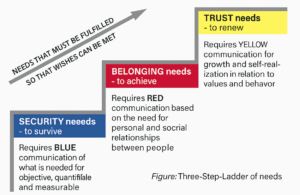
Security – material needs such as food, safety, environment, and health
Belonging – the rules and expectations for social relationships and social codes
Trust – the conditions for growth, self-realization, and competence development

Our definition / facts

it comes to needs, we distinguish three main groups, often described as a hierarchy. The most primary and immediate needs – Security conditions, form the foundation of the hierarchy, while social relationship needs – Belonging conditions, support the second level, which is concerned with self-realization and growth in the last and third level – Trust conditions. – All employees act as leaders when they take responsibility and contribute to developing Security, Belonging, and Trust.
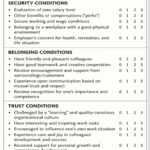
To indicate your own work energy in relation to value creation, clickone of the numbers 0, 1, 2, or 3, based on your personal and subjective assessment right now.

0 = improvement needed
1 = should be improved
2 = good
3 = very goo

When you are unsure, choose the lowest value.  – Start to click and then place your score on the right Ladder.

A PRACTICAL TRIPLE-T TEST FOR REWARD FACTORS

SECURITY CONDITIONS

Evaluation of own salary level
Other benefits or compensations ("perks")
Security and safe working conditions
Belonging to a workplace with a good physical environment
Employer’s concern for health, recreation, and life situation

BELONGING CONDITIONS

Have friendly and pleasant colleagues
Have good teamwork and creative cooperation
Receive encouragement and support from surroundings/customers
Experience open communication based on mutual trust and respect
Receive recognition for one’s importance and competence

TRUST CONDITIONS

Challenged by a learning and quality-conscious organizational culture
Have interesting and inspiring work tasks
Encouraged to influence one’s own work situation
Experience care and joy in colleagues’ development and success
Receive support for personal growth and competence development

Sum each column:

Security: 0

Belonging: 0

Trust: 0

Total score: 0

Home Lesson 8,3

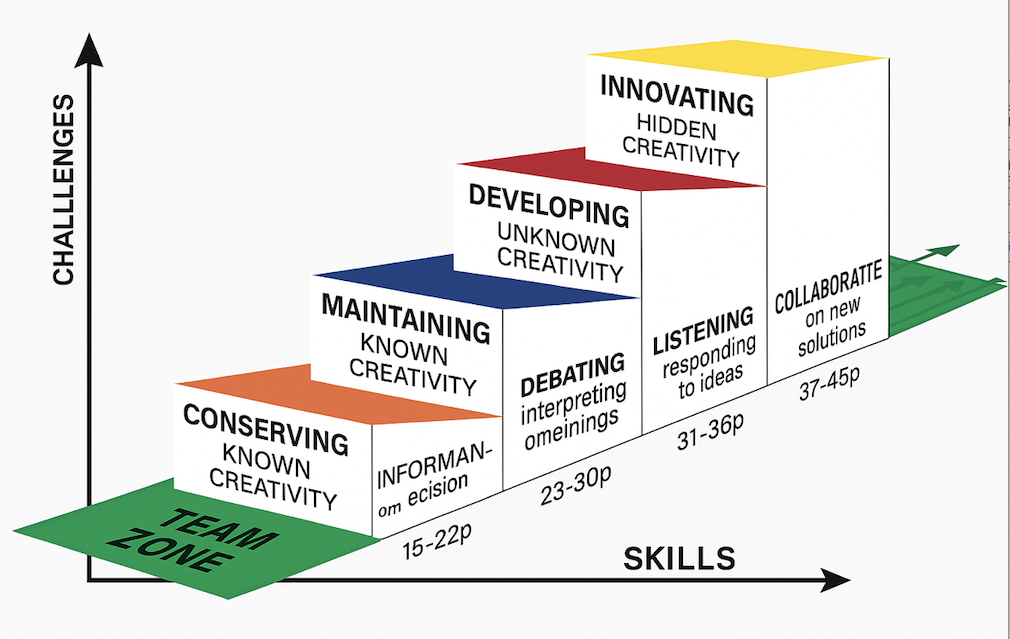
Click your 15-Steps and find The Result:

What Your Score Really Tells You

Your score reflects the reward you experience in your work.
In other words, the Triple Test result reveals the quality return on your own effort—and says a great deal about the energy and culture of your workplace.
Scores do not have to be identical. However, the closer your score is to the average of your colleagues, the closer your perceptions are to those of “most people” around you.
Most importantly, your score shows which step of the ladder your work environment is on.
Each level also requires different forms of organisation, which in turn demand different styles of communication like Blue on the first level, – Red on the second level and – Yellow on the third level. (see the Communication Ladder). These communication styles shape distinct leadership cultures within organisations.

How Understand Your Result ?

 
Orange – below 23 points: Critical
SGL says: Change jobs as soon as possible.
This environment is draining more than it gives back.
Blue – 23 to 30 points: Stable
SGL says: This is a solid workplace where your main focus is production and operations.
You are rewarded primarily for output and results.
Red – 31 to 36 points: Dynamic
SGL says: You are in the right place for learning, challenge, and personal growth.
The work is demanding, engaging, and inspiring.
Yellow – 37 to 45 points: Elite
SGL says: You are part of a high-performance team that demands everything.
Such environments are rare, but well known in elite sports and high-stakes projects.

Why Improve Your Score?

Whether you want to improve your own result or strengthen your workplace, start by marking the lowest-scoring items. There may not be many—but they matter most. Common low scorers often include:
No. 1 – Salary, No, 7 – Teamwork, and No, 11 – Quality systems.
If so, focus on improvement—both short-term and long-term. Experience shows that when one or two critical areas improves, the positive effect often spreads to the rest of the system.
The key is to start.

A good beginning is already half the victory.

NEXT LESSON / Secret : 9

In the same boat – about group growth and team development