Secret: 12,2 / Values / Needs

Job Phases and Life Cycle

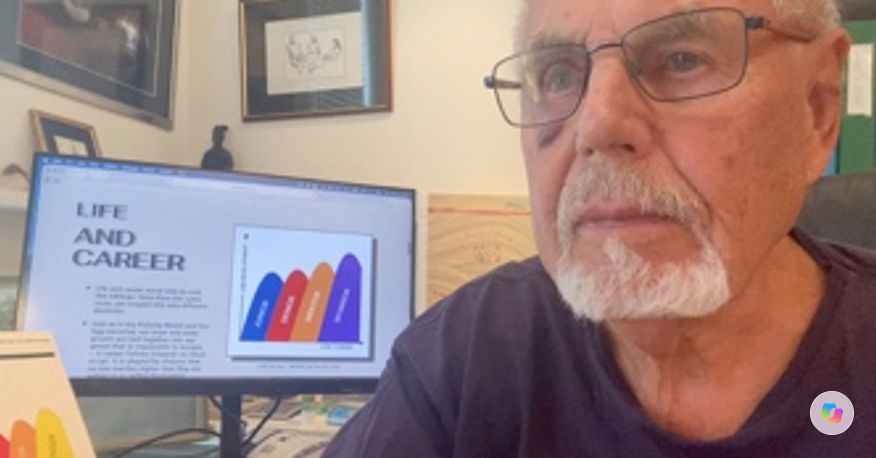
LIFE

AND CAREER

  • Life and career move side by side like siblings—born from the same roots, yet shaped into very different destinies.
  • Just as in the Polarity Model and the Egg narrative, our inner and outer growth are tied together into our genes that is impossible to escape. – A career follows however no fixed script. It is shaped by choices that no one reaches higher than they are willing to go within themselves
     

HOW are you – WHERE are you just now?

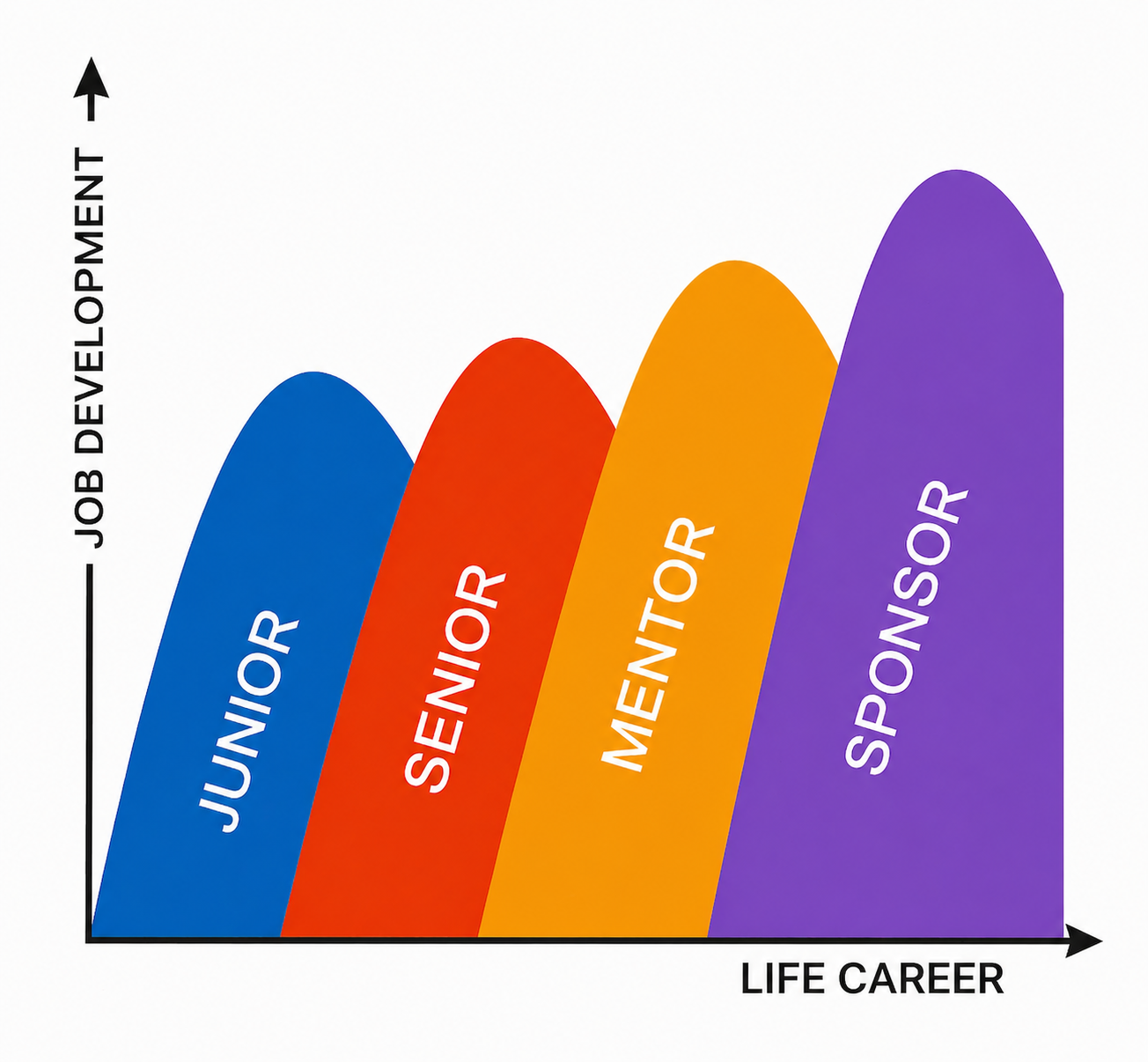
Your first job can define your direction.
The years that follow are crucial for building blue skills and experience.
Then comes the important thirties and forties where knowledge is stored
and competence is developed in red relationships and networks
 that demand supervisors or managers.
As a middle-aged person, you must choose between “embalming” or self-development which means more of the same, or a new career as a red/yellow manager, mentor or senior.
Finally comes the fifties with new challenges and circumstances
that can initiate your late career as a purple expert and sponsor for others.


 Motivation and job development belong together as the interaction between life stages and career stages.  The move from one phase to the next always requires a corresponding change in feelings, self-image and coping skills which can often be both rewarding and demanding at the same time. Master change from what is known and safe, to become motivated to discover the new, we find transition rituals in most cultures. This also applies to the major life changes in connection with school, family life, and career. For some people, the move from education to work, from career development to retirement, can be experienced as difficult because it means leaving what has been central in life and identity.
Only when we see life as a connected chain of events that creates the red thread in a person’s life and career, can we truly speak about job development as discovery. The four life stages – birth, youth, adulthood, and old age – continue as cycles in working life that we can recognize in:
    

Apprenticeship Phase


Master the reality shock from education to working life.
Learn the culture and the rules of the game.
Adapt to daily routines at work.
Learn to deal or survive with your manager or mentor.
Fight for membership in the organisation
and accept emotional being “good enough.”

Membership and Early Career

Balance your job responsibility with your commitment for private life, love, children, and family. Grow initiative and coping skills when facing pressure. Become familiar with your inner life and your own anxiety and aggression.
Find one sgl-coach, adviser, or guide. Evaluate your job situation and personal needs regarding pay, finances, and future. Work for continuous improvement both professionally and privately by enduring resistance to change. Dare to feel both joy and pain through personal growth, success, and setbacks.

Renewal and Midlife Crisis

Choose a specialisation and develop competence related to challenges and skills.
Build identity and visibility in your profession and organization. – Seek greater responsibility. Reassess career ambitions against dreams and hopes.
Face the classic midlife crisis linked to self-image, loss of parents, changes in family life, and your own needs.
Dare to grow older with renewed strength toward the future, alone or with a new partner.

Senior Career and Wisdom

Develop professional and personal networks as a power base for cooperation, partnership, and leadership. Build interest and dignity through sharing life experience.
Seek competence influence rather than position power. Become a professor, coach, sgl-adviser, mentor, or consultant for internal or external clients.
Use your abilities, experience, and life insight for the benefit of the organization and society for a long time.
Prepare for retirement and the next stage of life and senior-senior career.

The future will force you to change

The world of work over the next few decades may become almost unrecognizable. Artificial Intelligence is likely to be the most powerful force of change in modern history. Millions of traditional jobs could disappear, while entirely new professions emerge—built on collaboration between highly trained AI agents and uniquely talented human beings.
The future will belong not only to technology, but to those who know how to work with it.
As routine tasks are automated, the standard workweek may shrink to three or four days. That sounds liberating—but it also creates a new challenge: what will people do with all the extra time – and what will happens with your inner life and values?

Universal Income

Societies will need fresh answers. Without purpose, structure, and opportunity, leisure can easily turn into frustration, division, or despair.
This means the future economy must create more than jobs.
It must create meaning.
We may see the rise of Citizen Salary in industrialized nations: enough financial security for people to live, learn, and participate. But money alone will never be enough. Human beings need belonging, growth, challenge, joy, and connection. The societies that understand this earliest will lead the next era.

Change and Growth

At the same time, we can expect a surge in interest around health, wellness, spirituality, and personal development. Fitness centers, learning hubs, creative communities, and coaching networks may become as important as offices once were. Factories and infrastructure could be run by small teams of specialists, while much of the remaining work happens remotely—supported by intelligent systems and global networks.
Education will also be transformed. Instead of front-loading learning in youth, people may study throughout life. Future learning must include not only technical skills, but emotional intelligence, collaboration, resilience, self-leadership, and the ability to navigate open, autonomous work environments. Coaches, mentors, and leaders will become guides to life, more than suppliers for consumption.


This is where SGL can play a meaningful role.

SGL’s experience-based philosophy of leadership and group development is well suited for a world where people must lead themselves, work in dynamic teams, and find direction in constant change. Combined with AI-powered dialogue partners, the method can help individuals and organizations grow wiser—not just faster.  

The future will open two great frontiers at once:

  • The outer universe of technology, innovation, and global connection
    The inner universe of purpose, humanity, and consciousness

Both will matter. Neither can be ignored.
However, the difference between those who manage and those who merely survive will not be more
competence, but the ability to recognise their own resistance.
So if you are young, ambitious, and thinking about your future, dare to follow your boldest dreams.
In the years ahead, machines may outperform humans in speed, logic, and efficiency.
But imagination, creativity, empathy, longing, and courage remain deeply human strengths.
Choose a future that puts people at the center.
Because in the end, technology may build the world—but only humans can give us humanity.

Home Lesson 12,2

THREE SIMPLE QUESTIONS:


1 – Do you get a boost from your life arenas?
2 – Do you talk to anyone about your life situation and life phases?
3 – Do your colleagues know your wishes and ambitions?
Write down your short answers …

More about job and situational leadership in the
NEXT LESSON /  Secret 12,3